This topic covers the two things beginners check last and should check first: what trading really costs, and who, if anyone, supervises the firm holding your money.
Costs are easy to underestimate because most of them never appear as a line on a statement. The spread is built into the price, overnight financing is charged night by night, and a zero commission only tells you that one cost is missing. The official data shows why it matters. ASIC, Australia's regulator, reported that in the 2024 financial year 68% of retail CFD investors lost money, more than $458 million in total, of which $73 million was fees [1]. That is about 16% of the losses (calculated).
If you are new, read in this order. Trading fees explained prices the spread, commission and overnight financing on one worked trade and turns the total into a break-even move. What is a CFD shows how a contract for difference settles, why a small move can wipe out a deposit, and the leverage limits regulators set. Payment for order flow explains how commission-free brokers can still be paid for your orders. How to check if a broker is regulated lists the official registers and shows how clone firms copy real ones. Crypto regulation basics covers what rules crypto platforms face, and investor protection schemes explains what SIPC, the FSCS and similar schemes do and do not cover.
Every page links each number and rule to its primary source, usually a regulator, includes an example calculated in code, and lists the mistakes beginners make most often. Nothing here is a recommendation of any broker or product.
The three costs most beginners pay, a worked example that adds them up, and a table showing how trading often turns small fees into a large share of an account.
A CFD pays or charges you the price difference between opening and closing. A worked example, the costs of holding one, official loss data and the rules that cap leverage.
A trading firm pays your broker to fill your orders. How the money moves, where the conflict of interest sits, and what US and EU regulators have said about it.
What the EU's MiCA covers, how the UK and US treat crypto, which products are off limits to retail traders, and why regulation is not a safety net for prices.
SIPC covers up to $500,000 and the UK FSCS up to £85,000 when a firm fails. What those limits mean, what is excluded, and why crypto and forex usually get nothing.
A CFD is a leveraged contract that pays the difference between opening and closing price. What that means, a calculated example, costs and loss figures.
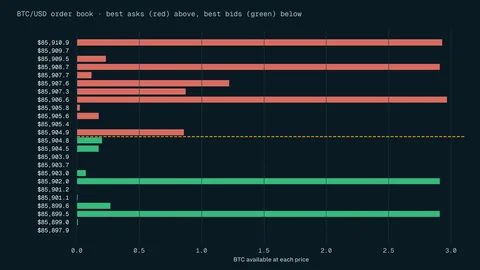
The spread is the difference between the bid and the ask price. Why it is a cost on every trade, who earns it, when it widens, with calculated examples.
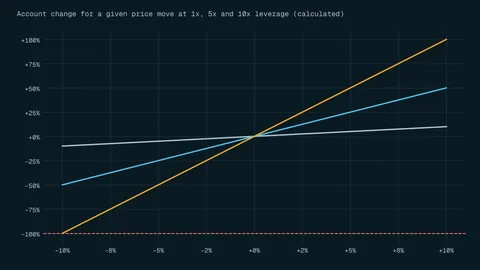
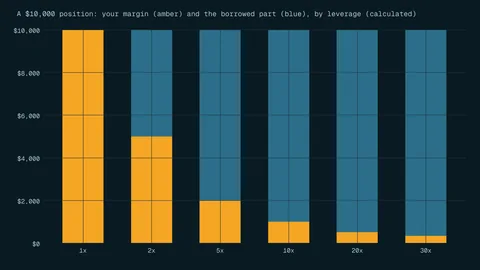
Leverage lets a small deposit control a much larger position, so small price moves become large gains or losses. What it means, with calculated examples.
Margin is money you put up as collateral so a broker lends you the rest of a position. How margin calls work, with a calculated example and real limits.
Slippage is the gap between the price you expected and the price you got. Why it happens, how it makes a stop-loss cost more, and how to limit it.
Questions people ask about this topic
What costs should a beginner check before the first trade?
The spread, the commission on both sides and, for leveraged products held overnight, the financing charge. ASIC lists all three as the main costs of CFDs and warns they can be high [4]. Work through them in trading fees explained.
How do I know if a broker is regulated?
Search the regulator's own register, then contact the firm only through the details listed there. The FCA gives this advice because clone firms copy real firms' names and reference numbers [5].
Why do regulators restrict CFDs?
Because most retail clients lose money on them. In 2018 ESMA cited national analyses showing 74-89% of retail CFD accounts typically lost money [6]. Read what is a cfd for the mechanics.