Most trading mistakes are not about missing information. They are about how losses, wins and other people's excitement change the decisions you make next.
This topic is about the habits of mind that cost traders money. They are not character flaws. Researchers have measured them in hypothetical choice experiments, in tens of thousands of real brokerage accounts and in professional futures traders. Knowing them will not make you profitable, but it can help you avoid the most common ways beginners turn a manageable loss into a large one.
The evidence is sobering. In a study of 66,465 US households from 1991 to 1996, those that traded most earned 11.4% a year after costs while the market returned 17.9% [1]. In 15 years of Taiwan Stock Exchange data, the aggregate performance of day traders was negative, and more than 75% of day traders quit within 2 years [2].
If you are new, read in this order. Start with loss aversion trading: why a loss hurts more than an equal gain pleases, and why that leads people to hold losers and cut winners. Then overconfidence bias trading shows how feeling sure leads to more trades and more costs. FOMO trading covers chasing prices that already moved and how scammers use the crowd. Revenge trading looks at what happens to risk-taking right after a loss. A trading journal explains how to keep records that show what really happened, and do most day traders lose money brings the research on results together.
Every page links each number to its primary source, includes a worked example calculated in code, and lists the mistakes beginners make most often.
Why a loss hurts more than an equal gain pleases, what the research found about holding losers, and a simple way to decide your exit before emotions take over.
Overconfidence leads people to trade more than is good for them. What the brokerage data shows, why traders rarely notice, and how to check your own confidence.
Why the fear of missing out pushes people to buy after a big rise, how common it is, how scammers exploit it, and a few checks to slow the decision down.
Why a loss pushes people to take more risk, what a study of futures traders found, and the numbers behind a loss spiral that starts with one bad trade.
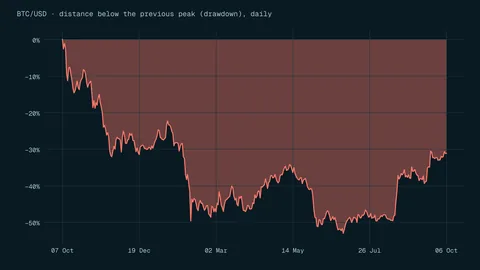
A drawdown is the fall in an account's value from its highest point, as a percentage of that peak. How to measure it and why recovery takes more, with examples.
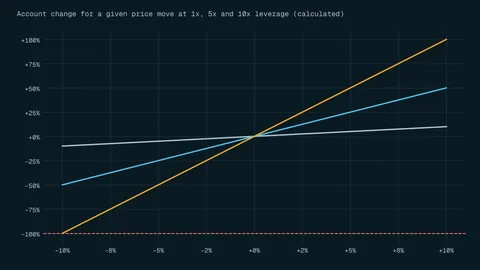
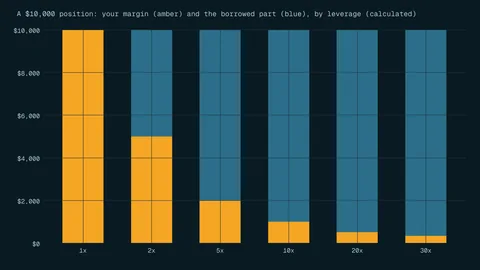
Leverage lets a small deposit control a much larger position, so small price moves become large gains or losses. What it means, with calculated examples.
Margin is money you put up as collateral so a broker lends you the rest of a position. How margin calls work, with a calculated example and real limits.
Questions people ask about this topic
What is trading psychology?
It is the study of how emotions and mental shortcuts affect trading decisions. Examples include loss aversion, the finding that losses loom larger than gains [4], and overconfidence, which researchers link to trading too much [1].
Can better psychology make me a profitable trader?
No page here can promise that. Good habits can limit avoidable losses, but most of the research we cite finds that frequent traders as a group do worse than the market after costs [1].
Where should a beginner start?
Read loss aversion trading first, because it explains why small losses so often become large ones. Then decide your risk per trade with position sizing.