Explainer · Trading Psychology
Loss aversion: why losses feel bigger than gains
Losing money hurts more than winning the same amount feels good. In trading, that one feeling explains a familiar pattern: small losses left to grow into large ones.

Quick answer
Loss aversion is the finding that losses loom larger than gains of the same size [1]. In trading it shows up as holding losing positions too long and selling winners too soon [2], and as taking more risk after a loss [3].
Key points
- Psychologists found that the pain of losing a sum appears greater than the pleasure of gaining the same sum [1].
- Facing a sure loss, most people in the original study chose a gamble with a worse expected result [1].
- In 10,000 brokerage accounts, investors sold winners more readily than losers, and the winners they sold did better afterwards [2].
- A loss you hold onto gets harder to recover: a 30% drop needs a 42.86% gain to get back to even (calculated).
- Deciding the exit price and the size before you enter is the simplest way to keep the decision away from the feeling.
On this page
What is loss aversion?#
Loss aversion comes from prospect theory, published by Daniel Kahneman and Amos Tversky in the journal Econometrica in 1979 [1]. Their central observation was simple: "losses loom larger than gains". Put in everyday terms, the aggravation of losing a sum of money appears to be greater than the pleasure of gaining the same amount [1].
Two more ideas from the same paper matter for traders. First, people judge results against a reference point, usually where they started, not against their total wealth. Second, the way people value outcomes is steeper for losses than for gains, and it bends differently on each side of that reference point [1]. Near a loss, people tend to take risks they would normally refuse. Near a gain, they tend to lock it in.
How does loss aversion change the choices people make?#
The clearest evidence is a pair of mirror-image questions in the original paper. In the first, people chose between a sure 3,000 and an 80% chance of 4,000. In the second, the same numbers were turned into losses: a sure loss of 3,000, or an 80% chance of losing 4,000 [1]. The paper does not attach real money to these choices; they are hypothetical problems put to respondents.
The answers flipped. With gains, most people took the certain 3,000. With losses, most people took the gamble, even though the gamble's average outcome was worse. The authors called this the reflection effect: turning gains into losses reverses the preference [1].
| Problem | Sure option | Gamble | Average of the gamble | Chose the gamble |
|---|---|---|---|---|
| Framed as a gain | Get 3,000 | 80% chance of 4,000 | 3,200 (calculated) | 20% |
| Framed as a loss | Lose 3,000 | 80% chance of losing 4,000 | -3,200 (calculated) | 92% |
Problems 3 and 3' in Kahneman and Tversky (1979), 95 respondents each [1]. The average of each gamble is 0.80 x 4,000, calculated by us.
Look at the loss row again. The sure loss of 3,000 was smaller than the gamble's average loss of 3,200 (calculated), yet 92% preferred to gamble. That is the trading problem in miniature: rather than accept a known loss now, people take a chance on a bigger one in the hope of getting back to zero.
Why do traders sell winners and hold losers?#
Terrance Odean tested this on real accounts. He studied trading records for 10,000 accounts at a large US discount brokerage between 1987 and 1993 [2]. He was looking for the disposition effect, which he defines as the tendency to hold losing investments too long and sell winning investments too soon [2].
He found it. These investors showed a strong preference for realising winners rather than losers [2]. The behaviour was not explained by rebalancing or by avoiding the higher trading costs of low-priced stocks, and it was not justified by what happened next [2].
In other words, the stocks people sold to lock in a gain went on to beat the stocks they kept in the hope of getting back to even by 3.4 percent over the following year, measured as average excess return [2]. The data are US stock trades from decades ago, so they do not prove the same size of effect in forex or crypto. They do show that the pull of the reference point is costly in real accounts, not only in survey questions.
What happens to risk-taking after a loss?#
Even professionals feel it. Joshua Coval and Tyler Shumway studied 426 proprietary traders in the Treasury bond futures pit at the Chicago Board of Trade during 1998, covering more than 5 million transactions [3]. Traders with losses in the morning were more likely to take above-average risk in the afternoon: a 31.2% chance, compared with 27.0% for traders who had made money in the morning [3]. The authors describe a losing trader as 15.5% more likely to take that extra risk [3].
The extra risk did not look like skill. Prices set by these trades tended to move back to their earlier levels within minutes [3]. The authors link the behaviour directly to the 1979 line that a person who has not made peace with his losses is likely to accept gambles that would be unacceptable otherwise [3]. Our page on revenge trading looks at this pattern in more detail.
How much does holding a losing trade cost?#
The arithmetic of losses is unforgiving. Gains and losses compound, so a 50% loss needs a 100% gain just to break even [4]. The general rule is: gain needed = loss / (1 - loss). Every extra step a loss is allowed to fall makes the climb back steeper, which is covered in full on our drawdown recovery page.
| Loss on the position | Gain needed to recover |
|---|---|
| Down 10% | 11.11% |
| Down 20% | 25.00% |
| Down 30% | 42.86% |
| Down 40% | 66.67% |
| Down 50% | 100.00% |
Calculated with gain = loss / (1 - loss), the arithmetic shown by Newall (2016) [4]. Costs are ignored, so real recovery needs slightly more.
How can you plan around loss aversion?#
None of the studies we cite tests a cure for loss aversion, and we do not claim one. What you can do is move the hard decision to the moment before the trade, when there is no loss yet to protect you from. The steps below do that.
- Write the exit before you enter
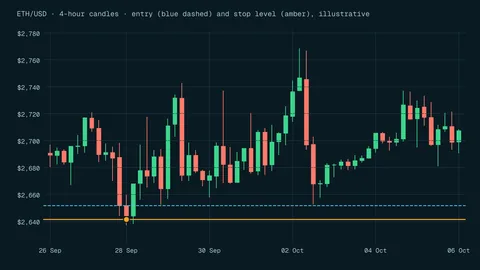
Note the price that would prove your idea wrong and why. If you cannot name it, you are not ready to trade.
- Size the trade from that exit
Use position sizing so the loss at your exit is an amount you have already accepted.
- Consider a stop order, knowing its limits
A stop loss order can act on the plan for you, but once triggered it becomes a market order and the price you get can differ significantly from the stop [5].
- Do not move the exit further away
Widening a stop after the trade goes against you is the disposition effect in action. Tightening it to lock in a gain is a different decision.
- Review closed trades, not just open ones
Compare where you planned to exit with where you did. A trading journal makes the gap visible.
Mistakes beginners make with loss aversion#
- Treating the entry price as the truth
The price you paid is your reference point, not the market's. The market does not know or care where you bought.
- Adding to a loser to lower the average
Buying more of a falling position to get back to even sooner increases the amount at risk at exactly the moment the idea is failing.
- Taking quick profits and slow losses
Cutting winners early while giving losers room is the pattern Odean found in 10,000 accounts, and the winners sold beat the losers kept [2].
- Raising risk to win it back
Taking bigger trades after a loss is the behaviour Coval and Shumway measured in professional traders [3]. A loss is a reason to slow down, not to speed up.
Frequently asked questions#
Is loss aversion the same as being careful?
No. Being careful means limiting risk before you trade. Loss aversion often does the opposite: the original research found that people facing a loss chose the riskier option [1].
Do losses really hurt twice as much as gains?
The 1979 paper we cite says losses loom larger than gains but gives no multiplier [1]. Treat any exact figure you read with care unless it names its source.
Does loss aversion affect professional traders too?
Yes. The Chicago Board of Trade study looked at professional proprietary traders, and those with morning losses were more likely to take above-average risk in the afternoon [3].
Should I never hold a losing trade?
Every trade is a losing trade at some point. The question is whether the reason you entered still holds. Decide in advance what would prove it wrong, and exit when that happens rather than when the loss stops hurting.
The bottom line#
Loss aversion is not a flaw you can switch off. It is the normal feeling that a loss hurts more than a gain pleases, and in trading it pushes people to hold losers, cut winners and take bigger risks after a bad day. The defence is to decide the exit and the size before the trade, when there is nothing to lose yet, and to accept that a planned small loss is part of the cost of trading. Use only money you can afford to lose, and read the risk disclosure before trading anything with leverage.
Sources
- Prospect Theory: An Analysis of Decision under Risk" (Daniel Kahneman and Amos Tversky), Econometrica, Vol. 47, No. 2, pp. 263-291.
- Are Investors Reluctant to Realize Their Losses?" (Terrance Odean), The Journal of Finance, Vol. LIII, No. 5, October 1998, pp. 1775-1798.
- Do Behavioral Biases Affect Prices?" (Joshua D. Coval and Tyler Shumway), The Journal of Finance, Vol. LX, No. 1, February 2005, pp. 1-37.
- Downside financial risk is misunderstood.
- Stop, Stop-Limit, and Trailing Stop Orders - Investor Bulletin.
Education only. This page is not investment, tax or legal advice. Trading and crypto can lose you money. See our risk disclosure.