What crypto actually is, how it works under the hood, and why regulators keep warning that you could lose everything you put in. Read this before you buy any.
Crypto is easy to buy and hard to understand. This topic fixes the second part. Each explainer starts from primary sources, such as the Bitcoin whitepaper, the Bitcoin Core source code, ethereum.org and regulator warnings, and works through one question in plain English.
The risk comes first because the evidence is blunt. A BIS study of crypto app use in 95 countries from 2015 to 2022 estimated that 73% to 81% of retail investors likely lost money on their initial bitcoin investment [1]. The UK FCA tells consumers to be prepared to lose all their money [2], and EU supervisors counted more than 17,000 different crypto-assets in March 2022 [3], with bitcoin and ether together making up about 60% of total market value at the time [3].
If you are new, read in this order. What is Bitcoin explains the asset, the shared ledger and where new coins come from. What is a blockchain shows how blocks are chained together with hashes, with a tampering example calculated in code, and why tamper evident is not the same as safe. The Bitcoin halving walks through the reward schedule in the source code and separates the rule from the price myths. What is Ethereum covers smart contracts, gas fees and the 2022 move to proof-of-stake. Stablecoins explains how tokens try to hold $1 and what can break that promise. Why is crypto so volatile looks at what regulators say drives the swings.
Every page includes a worked example, a table, the mistakes beginners make most often and links to the sources behind each number. None of it is a recommendation to buy or sell anything.
Bitcoin explained without hype: the shared record, how payments get confirmed, the fixed issuance schedule, satoshis, and the risks to weigh before you put in any money.
How a blockchain chains records together with hashes, who gets to add new blocks, a tampering example calculated in code, and why the ledger being hard to change does not make crypto safe.
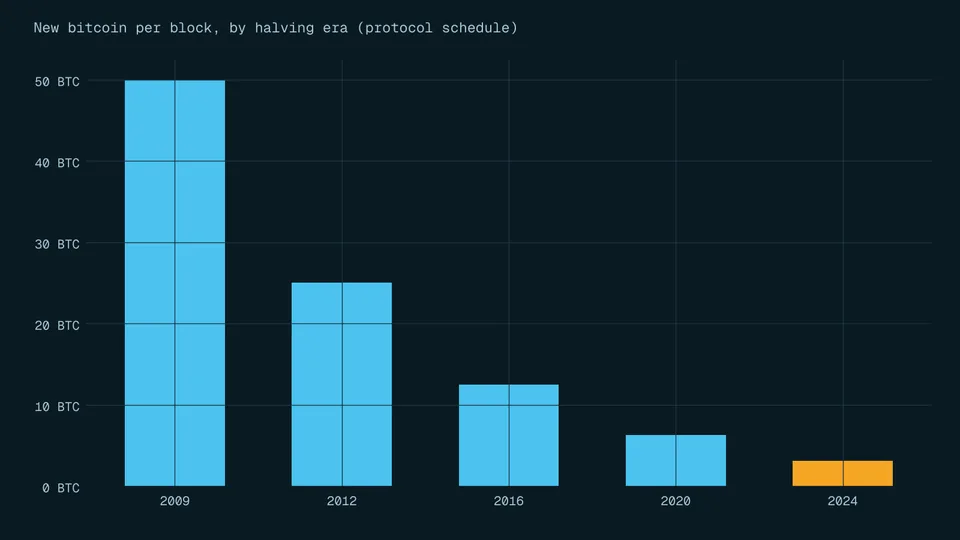
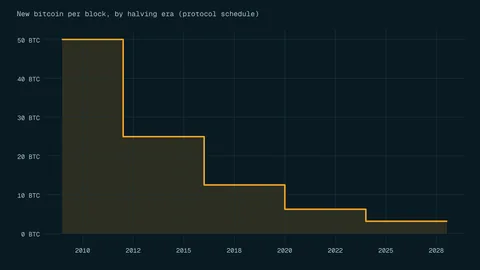
The halving cuts Bitcoin's new-coin reward in half every 210,000 blocks. Here is the rule from the source code, the schedule calculated era by era, and what the halving does not tell you about price.
Ethereum is a blockchain that runs programs called smart contracts, paid for in ether. How gas fees and staking work, how it differs from Bitcoin, and the risks first.
Stablecoins promise a fixed value, usually $1. How reserves and redemption are meant to keep that promise, how it breaks, and what TerraUSD's collapse shows.
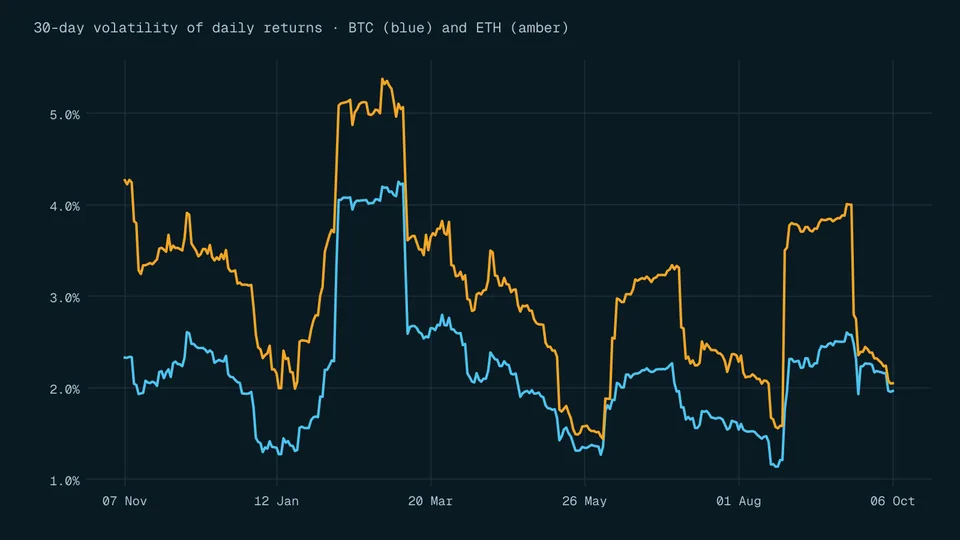
Crypto prices swing hard because value rests on demand and speculation in thin, lightly regulated markets. What drives it, how deep falls have gone and how to limit the damage.
A gas fee is what you pay in ETH to have a transaction processed on Ethereum. The formula, why fees jump when the network is busy, and a worked example.
Questions people ask about this topic
Where should a complete beginner start with crypto?
Not legally. The CFTC says virtual currency can work as a medium of exchange, unit of account or store of value, but it does not have legal tender status [5].
Why do regulators keep warning about crypto?
Because prices swing sharply and protections are thin. The SEC calls bitcoin and ether highly speculative investments [6], and EU supervisors list extreme price movements, fraud and hacks among the main risks [3].