Glossary
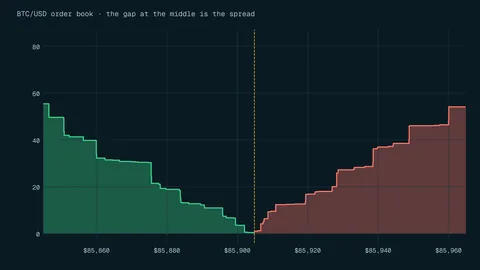
Spread: the gap between the bid and the ask
The spread is the one trading cost you pay even when the app says "zero commission". It is small on a single trade and large across many.
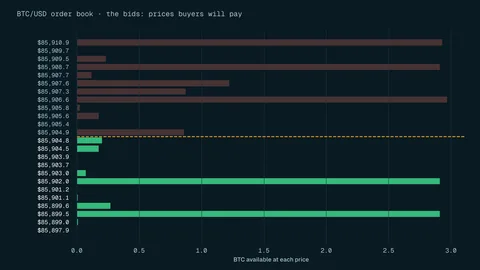
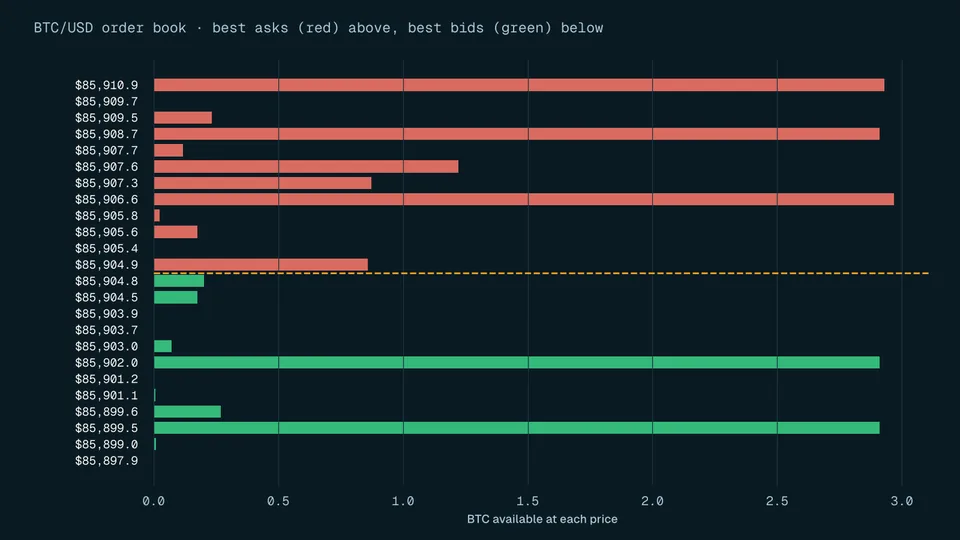
The spread is the difference between the bid (the highest price a buyer will pay) and the ask (the lowest price a seller will accept). Buying at the ask and selling at the bid means every round trip starts with this cost.
Quick answer
The spread is the difference between the bid and the ask price [1]. Because you buy at the higher price and sell at the lower one, each round trip loses the spread before fees. Spreads tend to be wider in illiquid markets [5].
Key points
On this page
What is the spread in trading?#
The SEC's glossary defines the spread as the difference between the bid price and the ask price [1]. FINRA's extended-hours rule puts it in plain words: the difference between what you can buy a security for and what you can sell it for [2].
One caution on vocabulary: in futures, "spread" can mean something else. The CFTC glossary uses it for buying one futures month and selling another [3]. On this page, spread means the bid-ask gap.
| Example quote | Bid | Ask | Spread | Cost of one round trip |
|---|---|---|---|---|
| 100 shares of a stock | $19.98 | $20.02 | $0.04 (0.2% of the midpoint) | $4.00 |
| 100,000 units of a currency pair quoted in dollars | 1.1000 | 1.1002 | 0.0002 (2 pips) | $20.00 |
Illustrative quotes, not real prices. All spreads and costs calculated; pip size 0.0001 [4].
Why is the spread a cost?#
Because you meet the ask when you buy and the bid when you sell. FINRA notes that large bid-ask spreads can reduce returns by increasing the buy price or lowering the sell price [5]. A study of 66,465 U.S. households trading in 1991 to 1996 estimated that the average trade had a round-trip cost of about one percent for the bid-ask spread, plus about three percent in commissions [6]. That data is old, but the mechanism has not changed.
Someone is on the other side of that gap. The SEC notes that a broker's firm may make money on the spread [7], and the CFTC warns that a forex dealer makes money when you trade more often or pay fees, spreads or commissions [8]. Our explainer on how brokers make money goes further.
When do spreads get wider?#
When there are fewer buyers and sellers. FINRA says securities with higher trading volume are generally more liquid, and that illiquid investments often have a wide bid-ask spread [5]. In market stress, illiquid investments can become even less liquid [5]. FINRA's extended-hours rule warns that lower liquidity and higher volatility outside regular hours may result in wider than normal spreads [2].
A narrow spread can indicate good liquidity, but FINRA adds that it does not give a complete picture of liquidity on its own [5]. The full explainer on the bid-ask spread shows how to check it before you trade.
Frequently asked questions#
Do zero-commission trades have no cost?
No. You still buy at the ask and sell at the bid, so each round trip pays the spread. FINRA also notes that firms offering free trading make money in other ways [9].
How do I see the spread?
Look at the live bid and ask on the order screen, not the chart's last price, and subtract the bid from the ask. Check it again just before you place the order, because it changes.
Is a 2-pip spread small?
It depends on position size. On 100,000 units of a pair quoted in dollars, 2 pips is $20 per round trip; on 1,000 units it is $0.20 (calculated).
The bottom line#
The spread is the entry fee you pay to trade now. Check the live bid and ask, turn the gap into money for your position size, and multiply by how often you trade. Expect it to widen in thin, stressed or after-hours markets. Read our bid-ask spread explainer and the risk disclosure before trading often.
Sources
- Bid Price/Ask Price (Investor.gov glossary).
- 2265. Extended Hours Trading Risk Disclosure (FINRA Rules).
- CFTC Glossary: A Guide to the Language of the Futures Industry.
- Order Instituting Proceedings Pursuant to Sections 6(c) and 6(d) of the Commodity Exchange Act (In the Matter of SK's Forex International, Inc. and Elizabeth Miskus Kemp).
- Understanding Market Liquidity and Your Investments.
- Trading Is Hazardous to Your Wealth: The Common Stock Investment Performance of Individual Investors.
- Trade Execution: What Every Investor Should Know.
- Customer Advisory: Eight Things You Should Know Before Trading Forex.
- Fees and Commissions.
Education only. This page is not investment, tax or legal advice. Trading and crypto can lose you money. See our risk disclosure.