Explainer · Trading Basics
What can you actually trade? Asset classes for beginners
Trading apps put shares, currencies, gold and crypto on the same screen, which makes them look alike. They are not. Some you own, some are contracts, and when the EU capped retail CFD leverage in 2018, the limits differed by a factor of fifteen.

Quick answer
Beginners can trade stocks, bonds, currencies (forex), commodities through futures, options, crypto and CFDs. The key difference is whether you own the asset or hold a contract on it. EU rules adopted in 2018 capped retail CFD leverage from 30:1 on major currencies down to 2:1 on crypto [8].
Key points
- The three classic asset categories are stocks, bonds and cash; real estate and commodities are others [1].
- Owning a share is different from holding a contract that tracks its price.
- Futures, options and CFDs are derivatives; with futures, losses can exceed the money you put in [4].
- ESMA's 2018 retail CFD leverage limits fall as volatility rises: 30:1 for major currencies, 2:1 for crypto [8].
- At 30:1, a 3.33% move against you equals your whole margin (calculated).
On this page
What can you actually trade?#
The SEC's beginner guide starts with three major asset categories: stocks, bonds and cash [1]. Stocks have historically carried the greatest risk and the highest returns of the three, bonds are generally less volatile with more modest returns, and cash equivalents are the safest with the lowest return [1]. Other categories exist too, including real estate, precious metals and other commodities, and private equity [1].
Traders add a second layer: products that let you bet on prices without owning the thing itself. Futures, options and contracts for difference (CFDs) are all contracts, and they usually come with leverage. The table sets the main choices side by side.
| Market | What you hold | Main risk to know first |
|---|---|---|
| Stocks | A share of ownership in a company [2] | Prices fall as well as rise; shareholders are last in line in a bankruptcy [2] |
| Bonds | A loan to an issuer | Generally less volatile than stocks, with more modest returns [1] |
| Forex | An exchange of one currency for another, often with a dealer [3] | High leverage; most OTC forex customers lose money [3] |
| Commodities via futures | A contract to buy or sell at a future date [4] | Losses can exceed the money you put in [4] |
| Options | A right, not an obligation, to buy or sell [5] | Complex; sellers of naked calls face theoretically unlimited loss [5] |
| Crypto | A digital asset without legal tender status [6] | More volatile than traditional currencies; most cash markets are unsupervised [6] |
| CFDs | A leveraged contract on the price of another asset [7] | 74-89% of retail accounts typically lost money in EU regulators' 2018 analyses [8] |
A summary only. Rules, products and protections differ by country.
Do you own the asset or a contract on it?#
This is the first question to ask about anything you trade. When you buy a share outright, you own part of a company [2]. The most you can lose is what you paid, and you can usually hold it as long as you like. Large company stocks as a group have still lost money in about one year out of three, according to Investor.gov [2], so ownership is not safety.
A derivative is a contract whose value depends on something else. FINRA describes an option as a derivative that gives the holder the right, but not the obligation, to buy or sell an asset [5]. The UK regulator describes CFDs as complex, leveraged derivatives typically offered through online trading platforms [7]. With a contract you own a set of rights and obligations, often with a time limit, financing costs and margin rules attached.
Protection differs too. In the US, SIPC protects cash and securities if a member brokerage fails, but, with limited exceptions, it does not protect commodity futures contracts, and it excludes foreign exchange trades [9]. See our page on sipc fscs protection for the details.
What is forex, and why is it so large?#
Forex is the market for exchanging currencies. It is very large: the Bank for International Settlements counted $9.6 trillion of over-the-counter currency trading per day in April 2025, and the US dollar was on one side of 89.2% of all trades [10]. That figure is total market activity, not retail trading, so the size says nothing about how easy it is for a beginner to profit.
Retail forex is usually traded with a dealer. The CFTC warns that in over-the-counter forex you trade only against your dealer, and that about two-thirds of customers at registered dealers lost money in the year its undated advisory covers [3]. US rules require a minimum deposit of 2% of the position's value for major currency pairs and 5% for others [11], which works out to 50:1 and 20:1 leverage (calculated). What drives currency prices is covered in what moves exchange rates.
- Daily OTC forex turnover, April 2025
- $9.6 trillion [10]all participants, not retail
- Share of forex trades involving the US dollar
- 89.2% [10]BIS Triennial Survey
- US minimum deposit, major currency pairs
- 2% [11]50:1 leverage, calculated
- Large company stocks, losing years
- about 1 in 3 [2]Investor.gov, as a group
What are commodities and futures?#
Commodities are physical goods, and the SEC lists precious metals and other commodities as an asset category of their own [1]. Most traders reach them through futures. The CFTC defines a commodity futures contract as an agreement to buy or sell a commodity at a future date, with the price and amount fixed when the agreement is made [4]. Some contracts settle in cash, and most are closed before the delivery date [4].
Most futures participants are hedgers, who use futures to reduce the risk of losses from price changes; others are speculators trying to profit from price moves [4]. The CFTC is blunt about the second group: speculating in futures and options is a volatile, complex and risky venture that is rarely suitable for individual investors, and many individuals lose all their money and can be required to pay more than they invested [4].
Where does crypto fit?#
The CFTC defines virtual currency as a digital representation of value that can work as money but has no legal tender status, and says bitcoin and other virtual currencies have been determined to be commodities under US law [6]. It also warns that crypto is more volatile than traditional currencies and that most crypto cash markets are not regulated or supervised by a government agency [6].
The UK regulator tells investors to be prepared to lose all their money on crypto [12]. ESMA's 2018 CFD rules set the lowest leverage cap for crypto of any asset, 2:1 [8]. If you are considering it, read why is crypto so volatile first.
Why do leverage limits differ between assets?#
Because some prices move more than others. When ESMA restricted CFDs for retail clients in 2018, it set leverage limits from 30:1 to 2:1 that vary according to the volatility of the underlying asset [8]. The more an asset tends to swing, the less leverage a retail client may use on it.
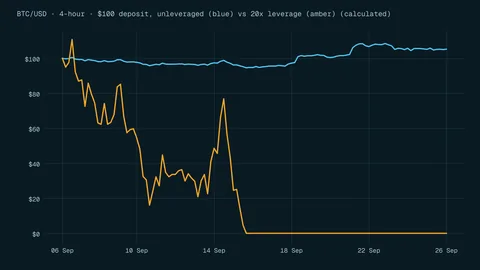
Leverage tells you how small a price move can wipe out your margin. At 30:1, the margin is 1/30 of the position, so a 3.33% move against you equals all of it (calculated). ESMA's 2018 rules also required providers to close your position once your funds fell to 50% of the minimum required margin [8], and UK rules do the same [7]. That can happen after a move half that size if you deposited only the margin (calculated).
| Leverage | Position on $1,000 margin | Loss from a 1% move | Move to 50% close-out | Move that equals the margin |
|---|---|---|---|---|
| 30:1 | $30,000 | $300 | 1.67% | 3.33% |
| 20:1 | $20,000 | $200 | 2.5% | 5% |
| 10:1 | $10,000 | $100 | 5% | 10% |
| 5:1 | $5,000 | $50 | 10% | 20% |
| 2:1 | $2,000 | $20 | 25% | 50% |
Assumes your account holds only the $1,000 margin and ignores costs. The close-out level comes from ESMA's 2018 rules [8].
How should a beginner choose what to learn first?#
- Ask what you would actually hold
The asset itself, or a contract on its price? Contracts add expiry dates, margin and financing.
- Check the leverage and the worst case
Find out if losses can exceed your deposit. For futures, the CFTC says they can [4].
- Find out who is on the other side
An exchange, or a dealer whose prices you must accept [3]? Our page on how do brokers make money explains why this matters.
- Check what protection applies
Broker-failure schemes cover some assets and not others. SIPC, for example, generally excludes futures and forex trades [9].
- Start with the simplest version
Understanding an unleveraged share purchase makes every other product easier to judge.
Mistakes beginners make when choosing what to trade#
- Treating every ticker as the same thing
A share, a CFD on that share and an option on it look alike on screen, but carry different risks, costs and protections.
- Reading market size as opportunity
Forex turnover of $9.6 trillion a day [10] measures the whole market, not retail traders. It does not make retail forex easier to profit from.
- Using the maximum leverage allowed
A leverage cap is a ceiling set by regulators, not a recommended level. At 30:1 a small move can trigger a close-out.
- Jumping to complex products first
Speculating in futures and options is rarely suitable for individual investors, in the CFTC's words [4]. Learn the basics on simpler assets.
Frequently asked questions#
What is the safest asset class for a beginner?
No asset is safe in every sense. Of the three major categories, the SEC describes cash equivalents as the safest but with the lowest return, and stocks as the riskiest with the highest historical returns [1].
Is a CFD on a stock the same as owning the stock?
Can I lose more than I put in?
The bottom line#
What you can trade ranges from shares you own outright to leveraged contracts on currencies, commodities and crypto. Before choosing, ask whether you hold the asset or a contract, how much leverage is involved, who is on the other side and what protection applies. Start with the simplest version, read the risk disclosure, and use the trading basics for beginners hub to work through the rest.
Sources
- Beginners' Guide to Asset Allocation, Diversification, and Rebalancing.
- Stocks - FAQs | Investor.gov.
- Customer Advisory: Eight Things You Should Know Before Trading Forex.
- Basics of Futures Trading.
- Options.
- Customer Advisory: Understand the Risks of Virtual Currency Trading.
- PS19/18: Restricting contract for difference products sold to retail clients.
- ESMA agrees to prohibit binary options and restrict CFDs to protect retail investors.
- What SIPC Protects.
- OTC foreign exchange turnover in April 2025.
- 17 CFR 5.9 - Security deposits for retail forex transactions.
- Crypto: The basics | FCA (InvestSmart).
Education only. This page is not investment, tax or legal advice. Trading and crypto can lose you money. See our risk disclosure.