Explainer · Trading Basics
Trading vs investing: what actually differs?
Trading and investing can involve the same markets and the same buttons. What separates them is how long you hold, what you hope to profit from, and how often you pay to get in and out.
Quick answer
Investing means holding assets for years towards a goal, accepting ups and downs along the way. Trading means seeking profit from short-term price moves. The IRS describes traders as seeking profit from daily price movements, not from dividends, interest or capital appreciation [2]. Trading usually means more costs and more risk.
Key points
- The difference is mainly holding period and what you hope to profit from [2].
- Every trade has a cost, so trading more often means paying more (calculated).
- In one large study, the households that traded most earned 11.4% a year while the market returned 17.9% [6].
- Day traders often rely on borrowed money, and the SEC says many never become profitable [3].
- Neither approach is safe: both can lose money, and leverage can make losses exceed your deposit [9].
On this page
What is the difference between trading and investing?#
There is no single official definition that sets the two side by side, so it helps to look at how regulators describe each one.
The SEC's beginner guide to investing is built around three ideas: your time horizon, meaning the months, years or decades you expect to invest towards a goal; your risk tolerance, meaning your ability and willingness to lose some or all of your money in exchange for potential returns; and diversification, spreading money across different investments to reduce risk [1].
The IRS, describing who counts as a trader for U.S. tax purposes, says a trader must seek to profit from daily market movements in prices, not from dividends, interest or capital appreciation, and must do so substantially and regularly [2]. The SEC describes day traders as people who rapidly buy and sell throughout the day [3].
So, in plain terms: investors aim to own something long enough for it to grow or pay income. Traders aim to profit from price changes over minutes, days or weeks.
| Investing | Trading | |
|---|---|---|
| Typical holding period | Years or decades | Minutes to weeks |
| What you hope to profit from | Growth, dividends, interest | Short-term price moves |
| How often you pay costs | A few times a year | Many times a week or a day |
| Use of borrowed money | Not required | Common, especially for day traders |
| Time needed | Occasional reviews | Often close to a full-time job |
| Main risks | Market falls, choosing poorly, not diversifying | Costs, leverage, fast losses, emotional decisions |
Summary of the sources in this article: SEC [1] [3], IRS [2]. Many people do some of both.
Why does trading often cost more than investing?#
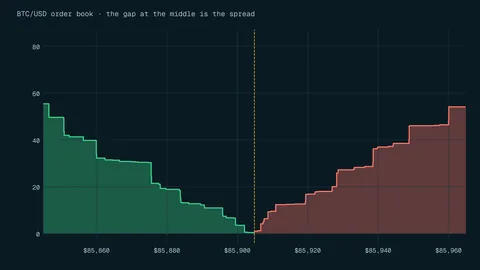
Because you pay to get in and out every time. FINRA lists commissions, markups or spreads, and other transaction costs that you are charged whenever you buy or sell [4]. Even a broker that charges no commission still has a bid-ask spread, and firms offering free trading earn in other ways, such as interest on margin loans [4].
The effect builds quickly. FINRA's rule on day-trading risk disclosure gives an example: at $16 a trade and an average of 29 trades a day, a day trader would need an annual profit of $111,360 just to cover commissions [5]. That figure works out to 240 trading days (calculated). Your own cost per trade may be very different, but the principle holds: frequency multiplies cost.
- Cost per round trip
- 0.2%worked example assumption
- 4 round trips a year
- $79.76on $10,000, calculated
- 1,250 round trips a year
- $9,181.20on $10,000, calculated
- Commission example in FINRA's day-trading disclosure
- $111,360 a year$16 a trade, 29 trades a day [5]
What does research say about people who trade a lot?#
The best-known study followed 66,465 U.S. households with accounts at a large discount broker from 1991 to 1996. The households that traded most earned 11.4% a year, while the market returned 17.9% [6]. The authors estimated an average round-trip cost of about one percent for the bid-ask spread and about three percent in commissions, and their central message was that trading is hazardous to your wealth [6]. The data are old and costs have changed, but the lesson about frequency has not.
Research on day traders is harsher. A study of Taiwan's stock market from 1992 to 2006 found that less than 1% of day traders could predictably and reliably beat the market after fees [7]. A related study found that more than 75% of day traders quit within two years [8].
The SEC's own warning is direct: day traders typically suffer severe financial losses in their first months, and many never become profitable [3]. It also calls day trading an extremely stressful and expensive full-time job [3].
Is investing safe, then?#
No. Investing has lower costs and fewer decisions, but it still carries risk. The SEC says stocks have historically had the greatest risk and highest returns of the three major asset categories, that bonds are generally less volatile with more modest returns, and that cash is the safest but offers the lowest return [1]. It also states plainly that risk and reward are entwined [1].
Investors pay costs too, just less often. The SEC's example of a $100,000 investment growing 4% a year for 20 years ends at about $208,000 with a 0.25% annual fee and about $179,000 with a 1% fee [11]. That gap of roughly $29,000 is our arithmetic on the SEC's approximate figures (calculated).
A longer time horizon helps in one specific way: the SEC notes that an investor with more time may be more comfortable with riskier, more volatile investments, because there is time to wait out slow periods [1]. It does not remove the risk of loss.
What changed for U.S. day traders in 2026?#
For years, U.S. brokers labelled frequent day traders as "pattern day traders" based on how many trades they made, and required them to keep at least $25,000 in equity [12]. FINRA has adopted changes that replace those pattern day trader rules with intraday margin requirements, effective June 4, 2026, with a transition period to October 20, 2027 for firms that need more time [12].
The new standard requires equity of at least 25% of the market value of long margin-eligible stocks in the account throughout the trading day [12]. Because of the transition period, your broker may still apply the old rules. Ask before you assume either set applies. Outside the U.S., different rules apply.
How do you decide which one you are doing?#
- Name the goal and the date
Money you need for a house deposit in two years and money for retirement in thirty are different problems. The SEC calls this your time horizon [1].
- Keep money you need out of it
Only risk money you can afford to lose on short-term trading. Day-trading disclosures warn you should be prepared to lose all of the funds you use for it [5].
- Choose a frequency on purpose
Decide how often you will trade before you start, then estimate the yearly cost with the trading cost calculator.
- Keep the two apart
If you do both, use separate accounts or at least separate records. The IRS expects U.S. traders to identify investment holdings separately, for example in a separate brokerage account [2].
- Size every trade before you place it
If you trade, decide the loss you accept first. Our guide to position sizing shows how.
Mistakes beginners make with trading vs investing#
- Turning a losing trade into an "investment"
Holding a short-term trade for years because selling would mean admitting a loss. Research on 10,000 brokerage accounts found investors sell winners too soon and hold losers too long [13].
- Ignoring costs because each one is small
A cost that looks tiny per trade can take a large share of an account when repeated hundreds of times, as the example above shows.
- Believing ads for quick profits
The SEC warns not to believe advertising claims that promise quick and sure profits from day trading [3].
- Using borrowed money to speed things up
Leverage makes gains and losses larger, and you can lose more than your deposit [9].
- Mixing goals in one account
Long-term savings end up funding short-term trades after a loss. Keep separate money for separate goals.
Frequently asked questions#
Is trading riskier than investing?
Usually, yes. Trading means more costs, more decisions under time pressure and often leverage. The SEC says day traders typically suffer severe losses in their first months [3]. Investing still carries the risk of loss.
Can I do both trading and investing?
Many people do. Keep the money, goals and records separate so a losing trade does not quietly become a long-term holding. U.S. traders are expected to identify investment holdings separately [2].
Do I need $25,000 to day trade in the U.S.?
The old pattern day trader rules required at least $25,000 in equity. FINRA is replacing them with intraday margin requirements from June 4, 2026, with firms allowed until October 20, 2027 to switch [12]. Check your own broker's current rules.
Is trading the same as gambling?
Not by definition, but frequent trading has a built-in cost on every trade. On average, the heaviest traders in one large study underperformed the market [6], and fewer than 1% of day traders in another were reliably profitable after fees [7]. Treat any money you trade as money you can afford to lose.
The bottom line#
Trading and investing differ less in what you buy than in how long you hold it and how often you pay to get in and out. Investing is slower and cheaper but not safe; trading adds costs, time pressure and often leverage, and research on active traders is sobering. Decide which one you are doing before you start, keep the money apart, and read the risk disclosure before trading anything with leverage.
Sources
- Beginners' Guide to Asset Allocation, Diversification, and Rebalancing.
- Topic no. 429, Traders in securities (information for Form 1040 or 1040-SR filers).
- Day Trading: Your Dollars at Risk.
- Fees and Commissions.
- 2270. Day-Trading Risk Disclosure Statement" (FINRA Rules).
- Trading Is Hazardous to Your Wealth: The Common Stock Investment Performance of Individual Investors.
- The cross-section of speculator skill: Evidence from day trading.
- Learning, Fast or Slow" (Brad M. Barber, Yi-Tsung Lee, Yu-Jane Liu, Terrance Odean, Ke Zhang), The Review of Asset Pricing Studies, Vol. 10, No. 1, pp. 61 - 93.
- Customer Advisory: Eight Things You Should Know Before Trading Forex.
- ESMA agrees to prohibit binary options and restrict CFDs to protect retail investors.
- How Fees and Expenses Affect Your Investment Portfolio - Investor Bulletin.
- Understanding the New Intraday Margin Requirements.
- Are Investors Reluctant to Realize Their Losses?" (Terrance Odean), The Journal of Finance, Vol. LIII, No. 5, October 1998, pp. 1775-1798.
Education only. This page is not investment, tax or legal advice. Trading and crypto can lose you money. See our risk disclosure.