Explainer · Trading Basics
Market, limit and stop orders explained
Every order makes a trade-off between getting filled and controlling the price. Knowing which one you are giving up is the first piece of risk control a beginner has.
Quick answer
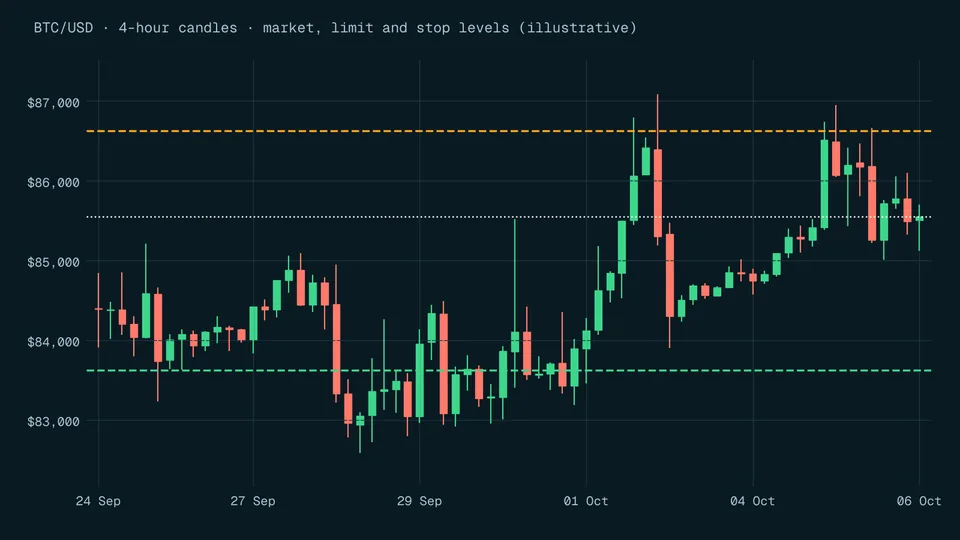
A market order buys or sells at the best available price, but that price is not guaranteed. A limit order sets the worst price you accept, but it may never execute. A stop order turns into a market order once a trigger price is reached [1].
Key points
- A market order trades now at the best available price, which can differ from the quote you saw [1].
- A limit order fixes your worst price but may not fill at all [1].
- A triggered stop order becomes a market order, so the fill can be far from the stop price [5].
- A stop-limit order controls the price but may leave you holding a falling position [5].
- No order type removes market risk [2].
On this page
What is the difference between a market order and a limit order?#
A market order says "trade now". The SEC defines it as an order to buy or sell at the best available price, and warns that the price it executes at is not guaranteed [1]. FINRA calls it the most common type of investor order, and says it generally fills at or near the current bid or ask during normal U.S. stock market hours [2].
A limit order says "trade only at this price or better". A buy limit sets the most you will pay; a sell limit sets the least you will accept [3]. The SEC's example: a limit order to buy at no more than $10 only executes if the price is $10 or lower [1]. The cost of that control is that a limit order is not guaranteed to execute [1].
So the choice is simple to state. A market order gives up price control to make sure you trade. A limit order gives up the certainty of trading to make sure of the price. If you are new to the vocabulary, the market order and limit order glossary entries give the short versions.
| Order type | What you control | What you give up | Main risk |
|---|---|---|---|
| Market | That the trade happens | The price | Fill worse than the quote, especially in fast markets |
| Limit | The worst price you accept | Certainty of a fill | The trade never happens |
| Stop (stop-loss) | The price that triggers the order | The fill price once triggered | Fill far below (or above) the stop in a gap |
| Stop-limit | Trigger price and worst fill price | Certainty of a fill after the trigger | Still holding a position that keeps moving against you |
Definitions from the SEC and FINRA [1] [2]. Written for stocks; forex, CFD and crypto venues can handle orders differently.
Why can a market order fill at a different price than the one you saw?#
Because the price on your screen is only good for a certain number of shares, and other orders may get there first. The SEC explains that quotes apply only to a specific number of shares, so investors may not receive the price they saw [4]. Its own example: you send a market order to buy 1,000 shares when the best offer is $3.00, and if other orders execute first, yours may fill at a higher price [1].
FINRA adds that this is most likely in fast-moving markets, and that orders placed outside normal hours carry the risk that news moves the price before the market opens [2]. The gap between the price you expected and the price you got is usually called slippage.
How does a stop order work?#
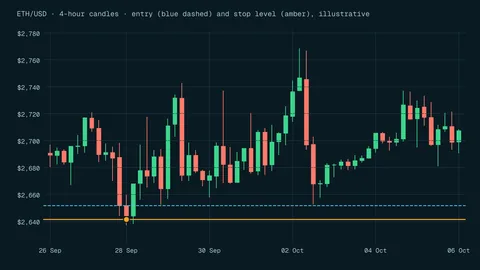
A stop order, also called a stop-loss order, waits until the price reaches a level you choose, the stop price [1]. A sell stop is placed below the current price and a buy stop above it [5]. When the stop price is reached, the order becomes a market order [3].
That last step is the part beginners miss. Once it is a market order, the SEC warns, the price you receive can deviate significantly from the stop price [5]. FINRA's example uses a $50 floor: in a fast market you could receive significantly less than $50 per share [6]. Brokers also differ on what triggers the stop: some use the last sale price, others use quotes [5].
- Shares bought
- 100 at $50worked example
- Sell stop
- $45planned loss $500, calculated
- Next opening price
- $42example gap below the stop
- Actual loss if filled at $42
- $800100 x ($50 - $42), calculated
- Loss beyond the plan
- $30060% more than planned, calculated
When does a stop-limit order help, and when does it hurt?#
A stop-limit order combines a stop with a limit: the stop triggers a limit order rather than a market order [2]. That stops you selling at a price far below what you wanted. The SEC names the trade-off: a stop-limit order may not execute at all if the price moves away from the limit [5].
Take the same 100 shares bought at $50, with a stop at $45 and a limit at $44. If the price gaps from $46 to $42, the stop triggers but no one buys at $44 or better, so nothing sells. You still hold the shares, now showing an $800 loss, and $1,000 if the price falls to $40 (calculated). A stop-limit protects the price, not the account.
What is a trailing stop?#
A trailing stop is a stop or stop-limit order whose stop price is not fixed; it moves with the market [1]. The SEC's worked example: you buy at $20, the price rises to $22 and you set a sell trailing stop $1 below the market. The price peaks at $24 and starts to drop, so the stop stays at $23, and the shares are sold when the price reaches $23 [5].
Once triggered, a trailing stop behaves like any other stop, so the same gap risk applies. Time instructions matter too: day orders generally cancel at the end of regular hours if not executed, while a good-til-canceled (GTC) order lasts until it fills or you cancel it [1].
How should a beginner choose an order type?#
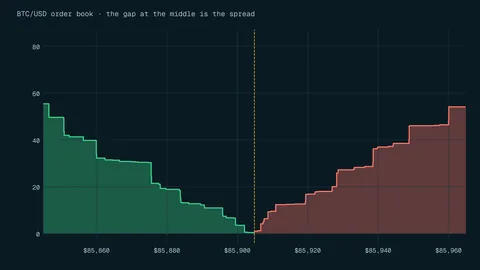
- Check the bid, the ask and the gap between them
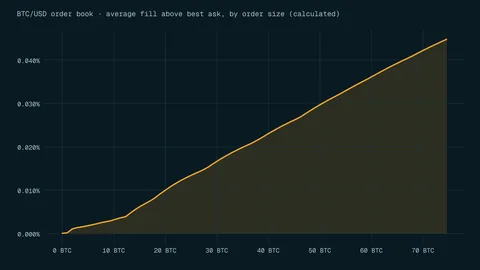
A market buy pays the ask and a market sell receives the bid. A wide bid-ask spread is a sign a limit order may be safer.
- Ask which matters more: the fill or the price
If you must exit now, a market order fills but the price can be worse. If the price matters more, use a limit and accept you may not trade.
- Decide your exit before you enter
Choose the price where your idea is wrong and decide whether that exit is a stop or a stop-limit, knowing each one's weakness.
- Set the time instruction
Pick a day order or GTC on purpose. A forgotten GTC order can fill weeks later.
- Read your broker's order rules
Find out what triggers stops (last sale or quote) [5] and whether the venue trades outside regular hours.
Mistakes beginners make with order types#
- Using market orders in thin or fast markets
The fill can be far from the quote. FINRA warns you might not get the price you saw, especially when markets move fast [2].
- Treating a stop as a price promise
A triggered stop is a market order. In a gap it fills at the next available price, not at your stop [5].
- Placing orders overnight without a limit
News can move the price before the open, so a market order queued overnight can fill at a very different price [2].
- Setting a stop-limit and forgetting it
If price jumps past your limit, nothing sells and the position stays open. Check open positions after big moves.
- Chasing a limit order
Moving your limit again and again to get filled turns it into a slow market order. Decide your price once.
Frequently asked questions#
Is a market order or a limit order better for beginners?
Neither is better in every case. A market order makes sure you trade but not at what price; a limit order fixes the price but may never fill [1]. A limit order can make sense when the spread is wide or the market is moving fast, as long as you accept it may not fill.
Does a stop-loss order guarantee my maximum loss?
No. Once the stop price is reached it becomes a market order, and the execution price can deviate significantly from the stop [5].
Can a limit order fill at a better price than my limit?
Yes. A limit order executes at your specified price or better [2]. It will never fill at a worse price than the limit.
Do these order types work the same way for forex and crypto?
The ideas are the same, but the sources here describe U.S. stock trading. Each forex, CFD or crypto platform sets its own order rules, so read them before you rely on a stop.
The bottom line#
Every order type trades certainty for control. Market orders fill but can surprise you on price, limit orders protect the price but can leave you out, and stops become market orders at exactly the moment prices are moving fastest. Pick the order on purpose, size the trade as if the exit could be worse than planned, and read the risk disclosure before trading anything with leverage.
Sources
Education only. This page is not investment, tax or legal advice. Trading and crypto can lose you money. See our risk disclosure.