Explainer · Markets & Macro
How central banks work, in plain English
A central bank changes one short-term interest rate and lets the rest of the financial system react. Knowing what it controls, and what it does not, makes rate-decision headlines much easier to read.
Quick answer
A central bank sets a short-term interest rate to keep inflation low and stable. The Fed aims for 2% inflation alongside maximum employment [3]; the ECB aims for 2% over the medium term [2]. Other rates and prices adjust with long, uncertain lags [9].
Key points
- The Fed has three legal goals: maximum employment, stable prices and moderate long-term interest rates [3].
- Both the Fed and the ECB aim for 2% inflation, measured by different price indexes: PCE in the US, HICP in the euro area [3] [2].
- After the September 2026 decisions, the Fed's target range is 3-3/4 to 4 percent [4] and the ECB's deposit facility rate is 2.50% [5]. Both can change at any meeting.
- A rate change reaches your loan through banks, and its full effect arrives with long, variable and uncertain lags [9].
- The ECB says the exchange rate is not one of its policy targets [11].
On this page
What does a central bank do?#
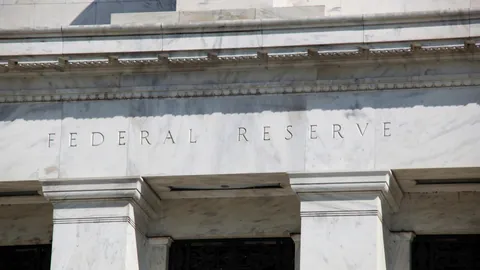
A central bank is the bank behind a country's or a currency area's banking system. The US one is the Federal Reserve, created by the Federal Reserve Act of 1913 to give the country a monetary system that could respond effectively to stresses in the banking system [1]. It is made up of the Board of Governors, a federal agency in Washington, D.C., and 12 Federal Reserve Banks around the country [1].
The Fed lists five key functions: it conducts monetary policy, promotes the stability of the financial system, supervises and regulates financial institutions, keeps payment and settlement systems safe and efficient, and promotes consumer protection and community development [1]. For people who trade or invest, the first function matters most, because it is where interest rates come from.
In the euro area that job belongs to the European Central Bank (ECB). Its price stability mandate is written into the Treaty on the Functioning of the European Union [2].
What does a central bank actually set?#
Not every interest rate. A central bank sets one short-term rate and lets the rest of the system react.
In the US, the Federal Open Market Committee (FOMC) sets a target range for the federal funds rate, the interest rate banks pay to borrow reserve balances overnight [3]. It influences that rate by changing the interest the Fed pays on the reserve balances banks hold at the Fed [3]. On 16 September 2026 the FOMC raised the range by 1/4 percentage point to 3-3/4 to 4 percent [4].
The ECB has three key rates. Banks can make overnight deposits with it at the deposit facility rate, borrow weekly against broad collateral in its main refinancing operations, and get overnight credit through the marginal lending facility [5]. In March 2024 the ECB's Governing Council decided to keep steering its policy through the deposit facility rate [5].
- Fed: federal funds target range
- 3.75% to 4%3-3/4 to 4 percent [4]
- Fed: change on 16 Sep 2026
- +0.25 points1/4 percentage point [4]
- ECB: deposit facility
- 2.50%[5]
- ECB: main refinancing operations
- 2.65%[5]
- ECB: marginal lending facility
- 2.90%[5]
- ECB deposit rate change since 11 Jun 2025
- +0.50 points2.00% to 2.50% [5], calculated
These were the levels listed on 6 October 2026. Both central banks can change them at any scheduled meeting, so check the official pages before you quote them. The table compares the two banks in the terms each uses.
| Question | Federal Reserve (US) | European Central Bank (euro area) |
|---|---|---|
| Legal goals | Maximum employment, stable prices, moderate long-term interest rates | Price stability, set out in the EU Treaty |
| Inflation goal | 2% a year | 2% over the medium term, symmetric |
| Price index for the goal | PCE price index | Harmonised Index of Consumer Prices (HICP) |
| Main policy rate | Federal funds rate (target range) | Deposit facility rate |
| Level after September 2026 | 3-3/4 to 4 percent | 2.50% (from 16 Sep) |
| Who decides | FOMC, 12 members | Governing Council |
| Scheduled meetings | 8 a year | 8 listed for 2027 |
Fed: goals and inflation measure [3], FOMC [6], rate [4]. ECB: goal and HICP [2], rates and Governing Council [5], 2027 meetings [7].
What inflation goal do central banks aim for?#
Both banks aim for 2%, but they measure it differently. The FOMC's goal is inflation of 2 percent per year, measured by the annual change in the price index for personal consumption expenditures (PCE), not the better-known CPI [3]. The Fed says it prefers PCE because it covers a wide range of household spending [8].
The ECB aims for 2% inflation over the medium term, measured by the Harmonised Index of Consumer Prices (HICP), a goal it set after its July 2021 strategy review [2]. It treats the target as symmetric: inflation below 2% is as undesirable as inflation above it [2]. The EU Treaty itself does not give a precise definition of price stability [2]; the 2% figure is the ECB's own reading of it.
Two percent sounds small, but it compounds. At 2% a year, a basket of goods that costs 100 today costs about 121.90 after ten years, and 100 in cash then buys what about 82.03 buys today (both calculated). Our guide to what is CPI shows how to read a price index yourself.
How does a rate decision reach your money?#
The Fed says changes in the federal funds rate are rapidly reflected in the rates banks charge on short-term loans and in floating-rate loans [3]. The ECB describes the same first step: a change in its official rates directly affects money-market rates and, indirectly, the lending and deposit rates banks set for their customers [9].
From there the effect spreads. Higher rates make it less attractive to borrow for consumption or investment [9], while lower rates on consumer loans encourage more spending [3]. Banks may also lend less when higher rates raise the risk that borrowers default [9]. For bond, share and currency prices, see how interest rates affect markets.
How are rate decisions made and announced?#
In the US, decisions are made by the FOMC. It has twelve members: the seven members of the Board of Governors, the president of the Federal Reserve Bank of New York, and four of the remaining eleven Reserve Bank presidents, who serve one-year terms in rotation [6]. The governors serve staggered 14-year terms after being nominated by the President and confirmed by the Senate, and the Board reports to Congress [1]. The FOMC holds eight regularly scheduled meetings a year [6]. Its September 2026 statement was released at 2:00 p.m. EDT and approved by a 12-0 vote [4].
In the euro area, the ECB's calendar lists two-day Governing Council monetary policy meetings in Frankfurt, each with a press conference after day two [7].
- Read the statement itself
The Fed's statement gives the new target range and how members voted [4]. A headline is a summary of a summary.
- Compare with the last level
Note the change in points, not just the direction. In September 2026 the Fed moved by 1/4 point [4].
- Plan before the announcement
Decide in advance whether you will hold, reduce or stay out. Our economic calendar guide shows how to put these dates in your own time zone.
Do central banks control exchange rates and share prices?#
Not directly. The ECB states that the exchange rate is not one of its policy targets and that it does not try to influence the exchange rate with its monetary policy operations [11]. Its decisions can still move markets: the ECB notes that policy actions may lead to adjustments in asset prices, such as share prices, and in the exchange rate [9]. The Fed says interest-rate changes tend to affect stock prices by changing how attractive shares are as an investment, and that changes in the attractiveness of US assets move exchange rates [3].
Notice the cautious words: may, tend to. The ECB adds that the transmission works with long, variable and uncertain time lags, so the precise effect is difficult to predict [9]. For the other forces behind currency prices, read what moves exchange rates.
The Fed has also acted as a backstop in a crisis. After the stock market crash of October 1987, the Fed affirmed its readiness to serve as a source of liquidity to support the economic and financial system [12].
Mistakes beginners make with central bank decisions#
- Thinking the central bank sets your loan rate
It sets one short-term rate. Banks set the lending and deposit rates you see, and those follow only indirectly [9].
- Assuming the ECB targets the euro
The ECB says the exchange rate is not a policy target [11]. A weaker or stronger euro is not by itself a sign the ECB will act.
- Expecting an instant effect on the economy
Market rates can move quickly, but the effect on spending and prices comes with long, variable and uncertain lags [9].
Frequently asked questions#
Who decides interest rates in the US?
The Federal Open Market Committee. It has twelve members, the seven Fed governors plus five Reserve Bank presidents, and holds eight regularly scheduled meetings a year [6].
What is the ECB's main interest rate?
The deposit facility rate, the rate banks earn on overnight deposits with the Eurosystem. The ECB steers its policy through this rate, which is 2.50% from 16 September 2026 [5].
Why does the Fed use PCE and not CPI for its goal?
Does this apply to the Bank of England or other central banks?
The general idea of setting a short-term rate is similar, but the goals, rates and calendars here are for the Fed and the ECB only. Check your own central bank's official website for its figures.
The bottom line#
A central bank sets one short-term rate in pursuit of low, stable inflation, about 2% for both the Fed and the ECB, and the rest of the financial system adjusts around it, slowly and not always as expected. Follow decisions from the official statement, note the size of the change, and plan before the announcement rather than reacting to it. Read the risk disclosure before trading around any rate decision.
Sources
- The Fed Explained: Who We Are.
- Our price stability objective (ECB monetary policy strategy).
- Monetary Policy: What Are Its Goals? How Does It Work?.
- Federal Reserve issues FOMC statement.
- Key ECB interest rates.
- Federal Open Market Committee.
- Meetings of the ECB's Governing Council and General Council.
- What is inflation, and how does the Federal Reserve evaluate changes in the rate of inflation?.
- Transmission mechanism of monetary policy.
- Meeting calendars and information.
- What is the role of exchange rates?.
- Stock Market Crash of 1987.
- Customer Advisory: Eight Things You Should Know Before Trading Forex.
Education only. This page is not investment, tax or legal advice. Trading and crypto can lose you money. See our risk disclosure.