News analysis ·
Kalshi Prime's crypto-backed margin loans: the risks
Kalshi Prime clients can borrow against bitcoin and ether held at BitGo to margin perpetual futures. We map the two layers of risk this stacks.
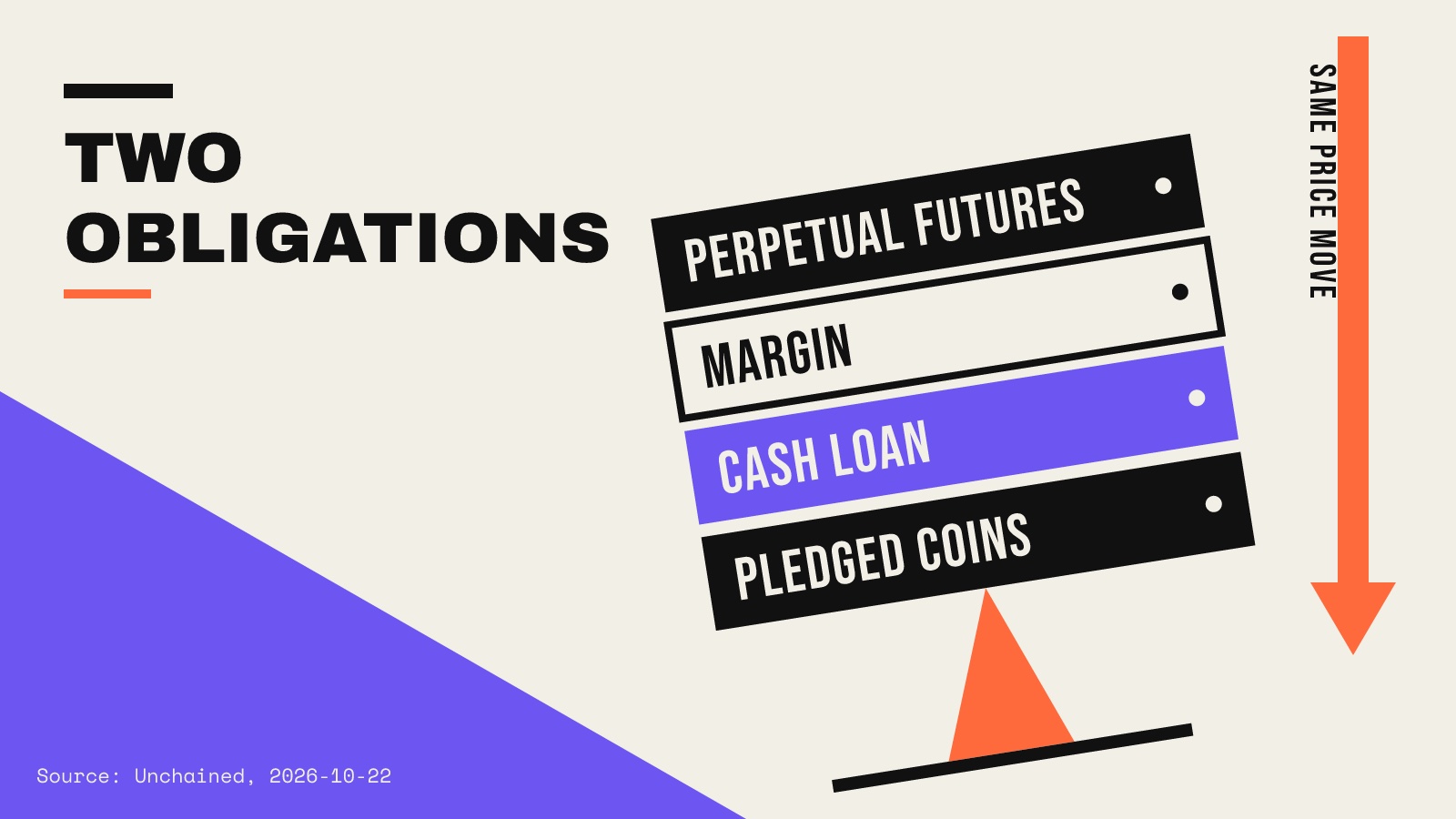
Kalshi Prime lets clients pledge bitcoin, ether or stablecoins kept with the custodian BitGo, take a cash loan, then use that cash as margin for perpetual futures on Kalshi's exchange, Unchained reported, citing Bloomberg. The pitch is simple: keep your coins and still trade. This article looks at what that structure does to a trader's risk, because a loan plus a leveraged position is two exposures, not one.
What Kalshi Prime announced
Kalshi Prime is the US-registered futures commission merchant, or FCM, of the prediction market operator Kalshi. An FCM is the broker that holds customer money and margin for futures trading. According to Unchained, which relayed a Bloomberg report published on Wednesday, the firm's clients can now pledge crypto at BitGo and receive a loan to fund margin on Kalshi's perpetual futures.
Chief executive Jeff Bandman framed it as a way to avoid selling coins to raise dollars. "What we wanted to do was make it possible for customers to stay in crypto," he told Bloomberg. He said the first audience he had in mind was crypto-native traders, including people already trading perpetuals on offshore platforms. He also named holders who do not want to sell bitcoin, a company in Latin America whose operations rely on dollar-pegged stablecoins, crypto trading firms and whales, meaning people with large coin balances.
The mechanics: three parties, two obligations
The structure is tri-party. On one side sits the trader, who takes on the debt. The money comes from Kalshi Katalyst, an affiliate of Kalshi Prime set up to lend. The pledged coins sit with BitGo Bank & Trust as custodian. Accepted collateral, per Bandman, is bitcoin, ether and stablecoins that meet the GENIUS Act, the US stablecoin law. Bloomberg reported that more custodians are expected to join later.
The cash from the loan then becomes margin. Margin is the deposit a futures broker requires before you can open a position larger than that deposit. A perpetual future is a futures contract with no expiry date, so a position can stay open as long as the margin holds. Kalshi began listing perpetuals earlier this year on crypto, gold and silver.
Here is the part that matters most for a beginner. The trader now has two obligations that can each go wrong. One is the loan: if the pledged coins fall in value, the collateral behind the loan shrinks. The other is the futures position: if the trade moves against you, the margin account shrinks. The news reports did not set out the loan terms, so readers should not assume how much can be borrowed, what it costs, or when a lender would ask for more collateral.
Where the risk is
The danger is not only leverage. It is that the same price move can hit both layers at once.
- Doubled exposure to one coin. A trader who pledges bitcoin and then opens a long bitcoin perpetual is betting on bitcoin twice. A sharp fall hurts the collateral and the position together.
- Two separate calls for cash. The futures account can face a margin call or liquidation, meaning the broker closes the trade. The loan may also need topping up if the collateral loses value. Both can arrive in the same bad hour.
- Losses larger than the trade itself. If the position is liquidated, the loan is still owed. The trader can lose the margin and still carry debt secured by coins they meant to keep.
- Counterparty and custody links. The plan ties together a broker, its lending affiliate and a custodian. A problem at any one of them can delay access to collateral or cash when you need it most.
None of this makes the product unusual. Borrowing against assets to trade is old. What is new for many crypto users is doing it inside a US-registered futures broker rather than an offshore venue, which changes the rulebook but not the arithmetic of leverage.
Crypto risks for prediction market users
Kalshi is best known for event contracts, where traders buy a yes or no position on an outcome. Those contracts cap the loss at what you paid. Perpetual futures do not work that way: with margin, a losing position can eat the deposit, and when that deposit was borrowed, the damage reaches the coins pledged behind the loan. Users who came to Kalshi for event contracts should treat its perpetuals as a different, more open-ended product.
What to watch
Kalshi is seeking a regulatory green light for perpetual-style products tied to oil and to US stocks. Separately, Kalshi Klear, the company's clearing arm, filed in September asking the Commodity Futures Trading Commission to permit margin on some of its event contracts. Margin on event contracts would mean a position no longer has to be paid for in full up front, which changes how losses behave for anyone who uses it.
Also watch for published loan terms: collateral haircuts, interest costs and what triggers a top-up. Those details decide how fast a trader can be forced out, and they were not in the reports.
Sources
- Unchained, 22 Oct 2026
Drafted with an AI model using only the sources listed, and released automatically after software checks on figures and originality. Nobody edited it by hand. For learning only; it does not tell you what to buy or sell.