News analysis ·
CFTC vs CME on perpetual futures: what traders risk
The CFTC says CME has no standing to fight U.S. perpetual futures. We explain how perps work and what a swaps ruling could mean for open positions.
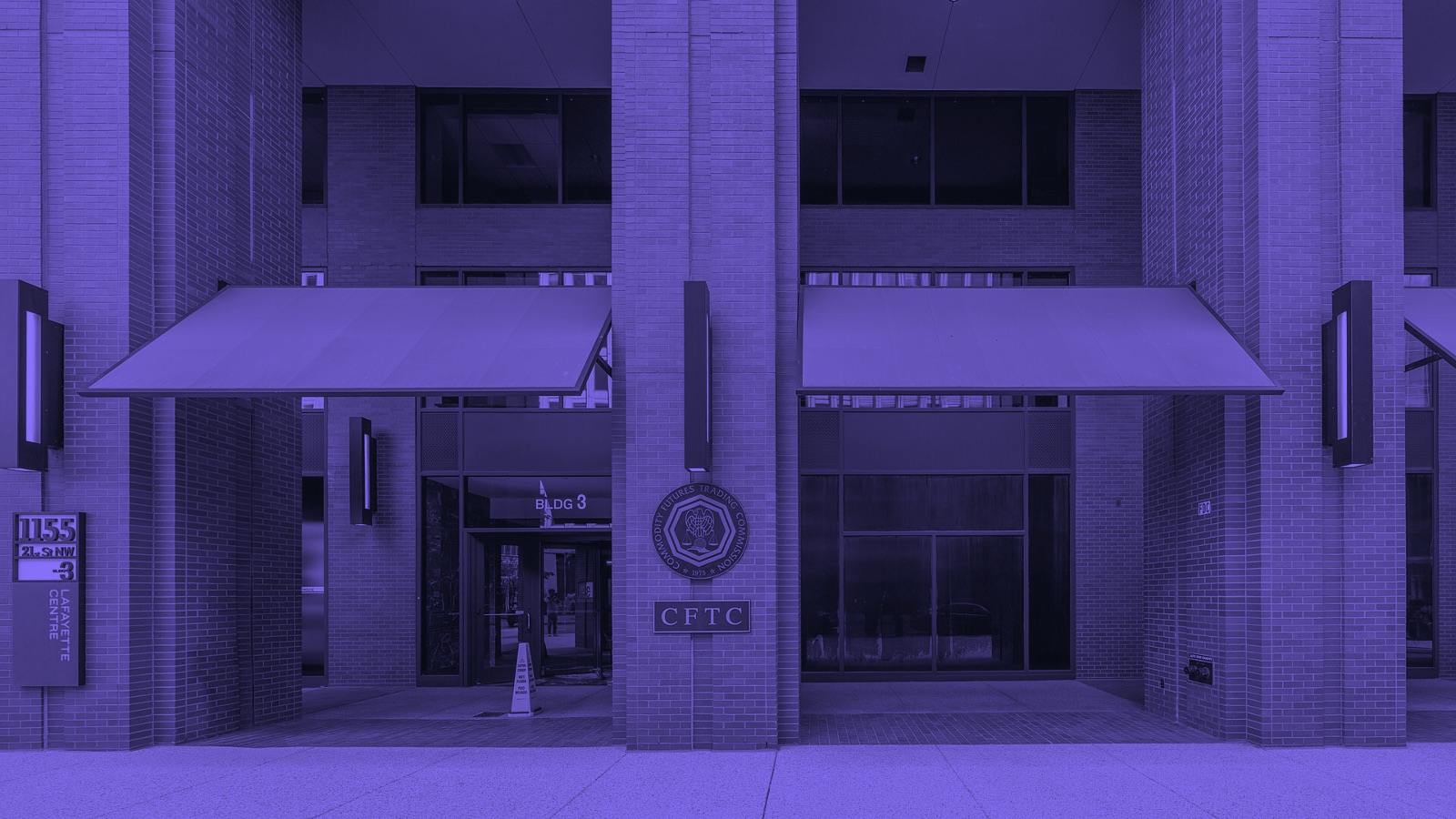
The U.S. derivatives regulator has told a federal court that CME Group has no right to block perpetual futures, the leveraged crypto contracts it began allowing in May. CoinDesk reported the CFTC's latest brief, filed on Friday. This article looks at how these contracts work, why the futures-or-swaps label matters, and what an unresolved lawsuit means for anyone holding a position.
A legal fight over what a perp is
In May the CFTC approved a bitcoin perpetual contract from Kalshi, the first of its kind cleared for the U.S. market. The agency said it would treat such products as futures and review each one on its own merits. That followed President Donald Trump's push to bring perpetual trading, long popular on overseas crypto venues, onshore.
CME Group went to court. Its argument is simple: a contract that never expires is not a future. CME says perps are really swaps, a category governed by a quite different set of rules.
The CFTC had already asked a federal judge last month to dismiss the case. According to CoinDesk, the new filing focuses on standing, the legal question of whether CME is even allowed to sue. The agency argued that complaints about more competition do not show a likely, near-term financial harm. It noted that CME's own crypto futures volume has risen since the policy change. It also said CME has told investors it sees no demand for perps and that they do not replace its futures, which the CFTC called inconsistent with what CME tells the court. CME spokespeople did not reply right away to CoinDesk's request for comment.
The mechanics: a future with no end date
A normal futures contract is an agreement to buy or sell an asset at a set price on a set date. When that date arrives, the contract settles and the position closes. A perpetual contract removes the date. You can hold the bet on the asset's future price for as long as your account can support it.
Perps are usually traded with leverage. Leverage means you control a position larger than the money you put down. The deposit, called margin, is what absorbs losses. If the price moves against you far enough that the margin can no longer cover the loss, the venue closes the position for you. That forced exit is a liquidation, and with high leverage it can happen after a fairly small price move.
Because there is no expiry, nothing forces a reset. A losing position does not end on a fixed day; it ends when you close it or when the margin runs out. That is a big part of why perps are attractive to active traders, and also why they can drain an account quickly.
Why the futures-or-swaps label matters to you
The label decides which rulebook applies: who may offer the product, who may trade it, and what protections come with it. Futures and swaps are supervised under different regimes in the U.S. If a court agreed with CME, products launched as futures could find themselves sitting in the wrong legal box.
TD Cowen's policy analyst Jaret Seiberg told clients on Monday that CME may still have the stronger position, both on standing and on treating perps as swaps. He also flagged the timing problem. In his words: "If this growth continues, it could create complications in trying to unwind this market if the CME prevails in the lawsuit."
Unwinding is the key word. It means positions, products and trading arrangements built under one set of rules may have to be closed or reshaped under another. CoinDesk's report does not say how that would work, and that uncertainty is itself the risk.
Where the risk is
Here are concrete ways a retail trader could lose money while this case is open.
- Leverage risk: a small move against a leveraged perp can wipe out the margin and trigger liquidation, regardless of what any court decides.
- No natural exit: without an expiry date, a losing trade can be held, and add losses, for far longer than a dated future would allow.
- Legal unwind risk: if CME wins, a venue may have to close or change products, and you may be forced out at a time and price you did not choose.
- Liquidity risk: uncertainty can thin out trading, widening the gap between buy and sell prices and making exits more costly.
None of these risks depends on whether bitcoin rises or falls. They come from the product's design and from its unsettled legal status.
What to watch
First, the judge's decision on the CFTC's request to dismiss. If CME is found to lack standing, the case may end without a ruling on whether perps are swaps. If the case goes ahead, that core question stays open.
Second, CME's response to the latest filing, which it had not given when CoinDesk reported the story. Third, how fast U.S. perp trading grows in the meantime, since Seiberg's concern is that a larger market is harder to unwind. If you trade these contracts, check how your venue describes the product and what it says it would do if the rules change.
Sources
- CoinDesk, 19 Oct 2026
Drafted with an AI model using only the sources listed, and released automatically after software checks on figures and originality. Nobody edited it by hand. For learning only; it does not tell you what to buy or sell.