Glossary
Short selling: profiting from a fall, with no ceiling on losses
Short selling flips the usual order: sell first, buy later. It sounds symmetrical with buying, but the risk is not.
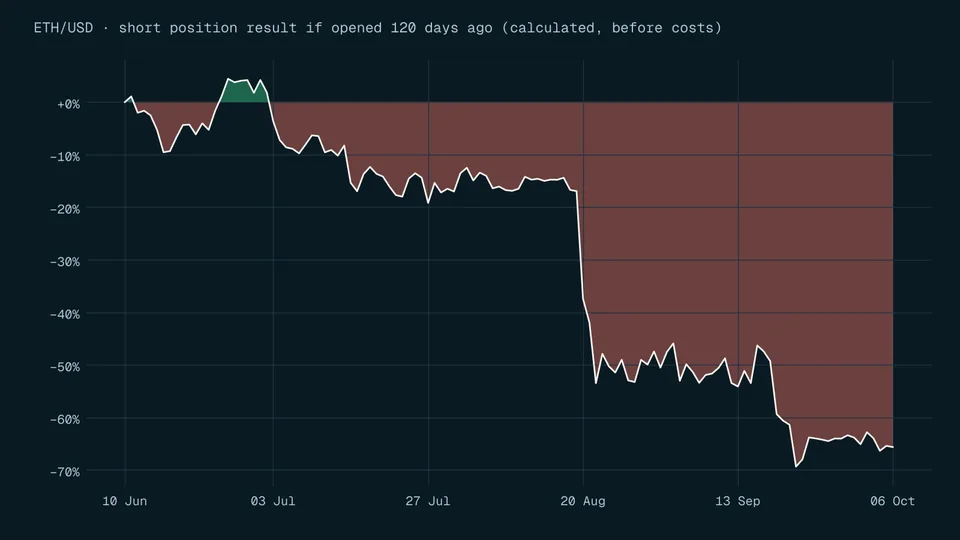
Short selling is selling an asset you do not own, usually by borrowing it, in the hope of buying it back later at a lower price. If the price rises instead, you lose, and because a price can keep rising, the possible loss has no fixed limit.
Quick answer
Short selling is generally the sale of a stock you do not own, borrowed for delivery [1]. If the price falls you buy back cheaper and profit; if it rises you lose. Because a price can keep rising, the SEC warns the possible loss is unlimited [1].
Key points
On this page
What is short selling?#
The SEC describes a short sale as generally the sale of a stock you do not own, or that you will borrow for delivery [1]. Its definitions page contrasts this with a long position, which means you own the security [2]. The CFTC glossary uses the term more broadly, for selling a futures contract or other instrument with the idea of delivering on it or offsetting it later [3].
The SEC lists three reasons people short: to profit from an expected drop in price, to provide liquidity, or to hedge the risk of a long position [1]. It also says plainly that short selling is for the experienced investor [2].
- Borrow
Your broker typically lends you the shares and charges interest; you are subject to margin rules [1].
- Sell
You sell the borrowed shares at today's price and receive the proceeds.
- Wait
While the short is open you owe any dividend the stock pays to the lender [1].
- Buy back and return
You buy the same number of shares, at whatever the price is then, and return them.
How much can you make or lose?#
The SEC's example: an investor borrows and sells Company A at $60 a share. If the price falls to $40, the profit is $20 a share minus transaction costs; if it rises to $80, the loss is $20 a share plus costs [1]. The table extends that example to 100 shares.
| Price when you buy back | Result on 100 shares | As share of the $6,000 sale |
|---|---|---|
| $40 | +$2,000 | +33.3% |
| $80 | -$2,000 | -33.3% |
| $120 | -$6,000 | -100% |
| $180 | -$12,000 | -200% |
Short sale of 100 shares at $60, before interest, dividends and transaction costs (calculated). The $60, $40 and $80 prices come from the SEC example [1].
What does it cost to keep a short open?#
Unlike a long position bought with your own cash, a short has running costs. The SEC notes that your brokerage firm will charge interest on the borrowed stock, that you are subject to the margin rules, and that if the stock pays a dividend you must pay it to the lender [1]. These costs add up the longer the trade stays open, even if the price does not move.
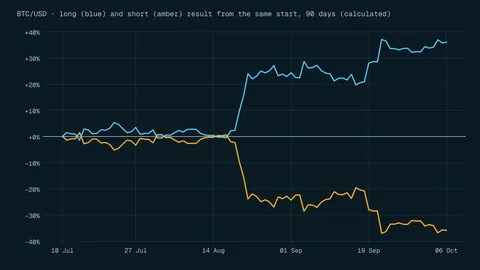
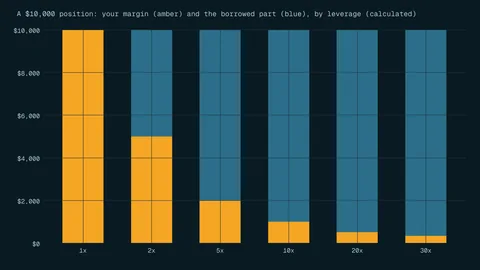
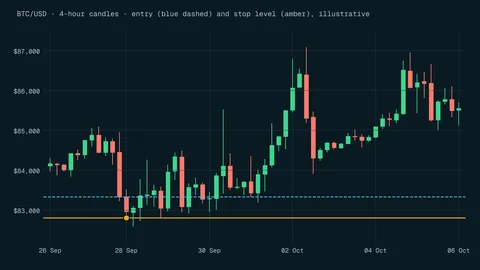
Our explainer on long and short positions walks through one trade from both sides. Because shorting runs on borrowed shares and margin, read margin and stop-loss before you try it, and remember a stop can fill well beyond its price.
Frequently asked questions#
Why do people short sell at all?
Why can a short position lose more than I put in?
Because the price you must pay to buy the shares back has no upper limit. The SEC says shorting leaves you open to the possibility of unlimited losses [1].
Is going short in forex or CFDs the same thing?
The direction is the same: you gain if the price falls and lose if it rises. The mechanics differ, and the SEC sources we cite cover stocks only. In forex with a dealer, when you sell, the dealer is the buyer [4].
The bottom line#
Short selling lets you profit from a fall, but it turns the usual risk upside down: the gain is capped at the sale price and the loss is not. It also costs interest and dividends while you wait. If you are new, learn it on paper first, size any real short small, and read the risk disclosure and our guide to long and short positions.
Sources
Education only. This page is not investment, tax or legal advice. Trading and crypto can lose you money. See our risk disclosure.