News analysis ·
Kalshi, Coinbase Court Loss: Prediction Markets Risks
A federal appeals court won't shield Kalshi and Coinbase from New York and Connecticut. What that state fight means for traders holding event contracts.
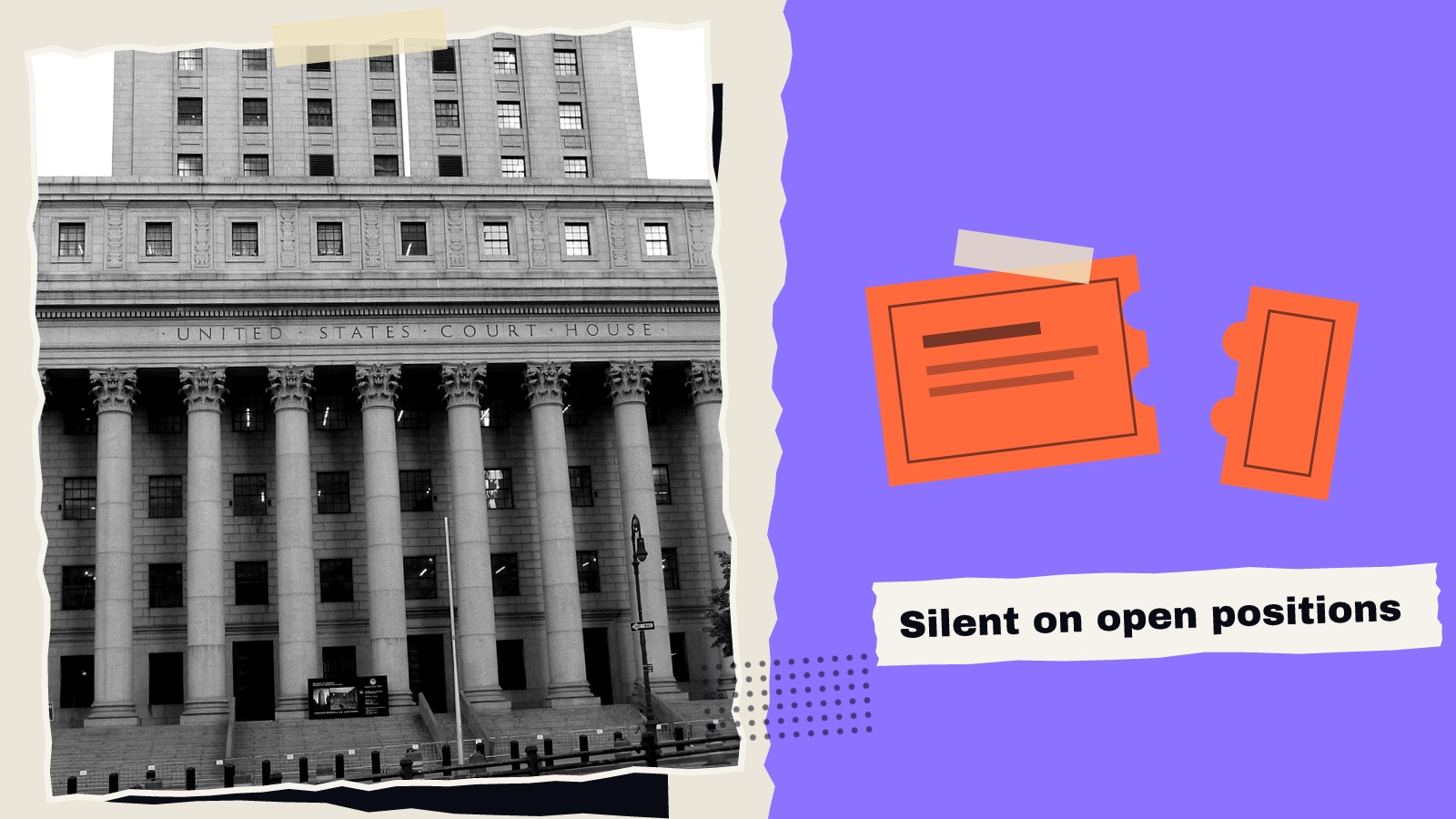
A federal appeals court has refused to protect Kalshi and Coinbase from state regulators while the companies appeal, Unchained reported. The ruling keeps New York and Connecticut free to press their cases over sports event contracts. This article looks at what that legal fight means for a small trader who holds, or plans to hold, those contracts.
What the Second Circuit decided
On Tuesday, Nov. 3, the Second Circuit Court of Appeals turned down requests for an injunction pending appeal. An injunction is a court order that would have told the states to stand back until the appeals are decided. Kalshi asked for that shield against both New York and Connecticut. Coinbase asked for it against Connecticut only.
The court handled three cases together. Kalshi is suing New York's gaming regulator and Connecticut's consumer protection department. Coinbase is suing Connecticut Attorney General William Tong. Judges Walker, Jacobs and Bianco issued a two-page order. According to Unchained, it said only that the companies had not shown such an injunction was justified. It gave no further reasoning.
This is the second round of losses. Earlier this year a federal judge in Manhattan declined to block New York, and a Connecticut district judge denied both firms in August. Chainlink Labs' top lawyer, Katherine Kirkpatrick Bos, told Unchained: "Kalshi's preemption argument has failed." She also said that after the Manhattan ruling, the judge had treated state gambling oversight as a traditional state power.
Are prediction markets safe when states and Washington disagree?
Prediction markets let you buy contracts that pay out if an event happens, such as a team winning a game. Their safety depends partly on which rulebook applies. Kalshi and Coinbase say the Commodity Exchange Act puts sports event contracts under the CFTC, the federal derivatives regulator. New York and Connecticut treat them as gambling, which states have long regulated themselves. Until courts settle that question, a trader is relying on a product whose legal home is in dispute.
The mechanics: why the rulebook matters to your position
An event contract is a simple bet on a yes or no outcome. You pay a price now. If the event happens, the contract settles at its full value. If it does not, it settles at zero. The price in between moves with the crowd's view of the odds, and you can usually sell before the event if someone is willing to buy.
That last part is the weak point. Your ability to exit depends on the platform staying open to you and on other traders staying in the market. Liquidity, meaning how easily you can buy or sell without moving the price, is not a fixed feature of the product. It comes from people. If a state ruling forced a platform to stop serving residents, buyers from that state would disappear. Fewer buyers usually means a wider gap between the price you can sell at and the price you can buy at.
There is also a question the court left open. Unchained noted that the order is silent on positions already open on either platform. So nothing in it tells a holder what would happen to an existing contract if a state won. Those terms could be set later, by a court or a settlement, and the holder has no say in them.
Where the risk is
None of these outcomes has happened. They are the ways a trader could lose money while the legal question stays open.
- Forced exit: if a platform had to cut off users in a state, you might have to sell before the event at whatever price the thinner market offers, locking in a loss.
- Wider spreads: news of a court loss can push active traders away, so the cost of getting in and out rises just when you most want to leave.
- Uncertain treatment of open contracts: the order says nothing about them, so the terms for unwinding a position could be decided by someone else.
- Platform pressure: New York's damages claim against Kalshi could reach at least $36 billion, according to Unchained. A company facing claims of that size may change products, fees or access with little notice.
Any event contract can lose its full value if the outcome goes against it. A legal dispute adds a second way to lose money on top of that.
What to watch next
All three appeals are still pending, so the core argument has not been decided. The CFTC has filed its own lawsuits against both states. The PM Pulse reported that the agency got permission to file arguments as an amicus, or outside adviser to the court, on Kalshi's New York motion, Unchained said. Separately, New York's case against Kalshi in state court began in July, and Connecticut's attorney general filed his own in August.
The stakes for the companies are growing. In its third-quarter report on Oct. 29, Coinbase put annualized prediction market revenue at more than $200 million. That gives the exchange a strong reason to keep fighting. It does not tell you how the courts will rule, or how quickly any ruling could change what you are allowed to trade.
Sources
- Unchained, 4 Nov 2026
Drafted with an AI model using only the sources listed, and released automatically after software checks on figures and originality. Nobody edited it by hand. For learning only; it does not tell you what to buy or sell.